Home Decor
Warm Minimal Living Room Ideas on a Budget
Written by Clara Bennett, Fashion & Home Editor
Last updated Jul 10, 2026 9 min read
Quick Summary
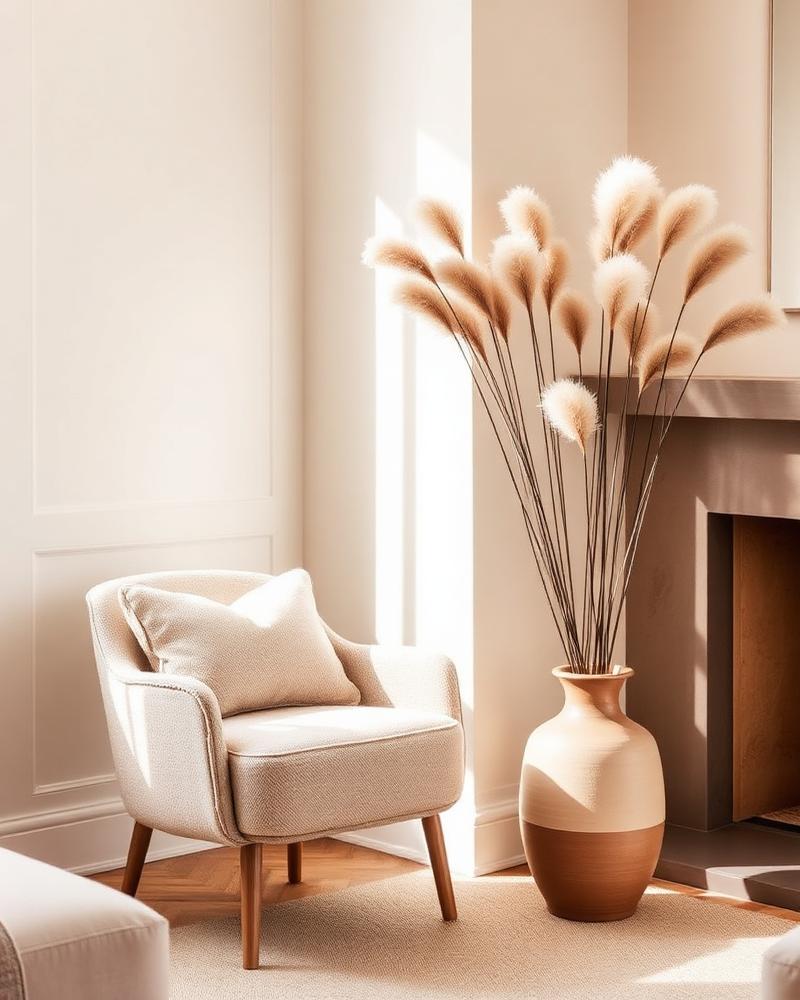
Three lamps instead of one ceiling light, three textures in the same colour family, and one oversized natural element will transform a room for under a few hundred.
Introduction
Warm minimalism is the reason some sparse rooms feel serene while others feel unfinished. The difference is almost never how much furniture is in the room — it is lighting temperature, texture layering and scale. Cold overhead light flattens everything it touches; a room lit at three low points in warm white immediately reads as calm. A room in five colours reads as busy; a room in one colour family with four different materials reads as considered. And a room full of small objects reads as cluttered, while the same room with one oversized element reads as intentional. None of those three levers require expensive furniture, which is why warm minimalism is one of the few interior styles that genuinely works on a budget. This guide covers each one in order of impact, with the specific changes to make first.
Light it in layers
The single biggest upgrade to any living room costs less than a new cushion set: turn off the overhead light and replace it with three lower light sources at different heights. A floor lamp in a corner, a table lamp on a side table, and a smaller lamp or wall light on the opposite side of the room is the standard formula.
Bulb temperature matters as much as placement. Use 2700K warm white everywhere in the room, without exception. A single 4000K bulb among warm ones is instantly visible and undoes the effect, which is why mismatched bulbs are the most common reason a carefully decorated room still feels cold.
Put the lamps on dimmers or use smart bulbs so the room can shift from working brightness in the afternoon to low light in the evening. Rooms that only have one setting always feel like one of those settings is wrong.
Layer texture, not colour
Warm minimalism stays within a single colour family — cream, oat, sand, warm greige — and creates all of its interest through material contrast instead. Aim for at least four textures in the room: bouclé or wool, linen, wood and ceramic or stone.
The practical version of this rule is to look at your sofa and count how many different materials are within a metre of it. If the answer is one or two, add a chunky knit throw and a linen cushion before you consider buying anything larger.
Keep the sheen levels varied too. A matte ceramic vase next to a glazed one, or a raw oak side table beside a polished stone tray, gives depth that a colour scheme alone cannot.
The budget texture list
A washed linen cushion cover set, a heavy knit or wool throw, a jute or wool-blend rug, one wooden object with visible grain and one hand-finished ceramic. Those five items cover every texture category and cost far less than replacing furniture.
Get the scale right
Small rooms are made to look smaller by lots of small things. One oversized element — a large vase with branches, a single big artwork, a generous floor lamp — makes a modest room read as deliberate rather than sparse.
Art should hang lower than most people instinctively place it: the centre of the piece at eye level from a seated position, roughly 145 to 150cm from the floor in a standard room. Art hung too high is the most common visual mistake in living rooms and it makes ceilings feel lower, not higher.
Rugs should be large enough that the front legs of every piece of seating sit on them. A rug that floats in the middle of the floor visually shrinks the room; one that anchors the furniture expands it.
On surfaces, group objects in odd numbers at three different heights, and leave at least half the surface empty. Negative space is a design element in warm minimalism, not an absence of one.
The order to do it in
If you are working with a small budget, sequence matters. Start with bulbs and lamps, because lighting changes how every existing thing in the room looks and costs the least. Then add textiles — a throw, cushion covers and a rug in the same colour family.
Third, edit. Remove roughly a third of the small objects in the room and store them; almost every room improves at this step and it costs nothing. Then add back only the pieces that earn their place.
Finally, add the one oversized element and, if the budget allows, a single natural material upgrade such as a wooden side table or a stone tray. Doing it in this order means each stage builds on a room that is already improving, rather than spending the largest amount first on furniture that the lighting was making look flat anyway.
Small-space adjustments
Choose furniture with visible legs; the sightline underneath makes a small room feel larger than the same footprint of boxy pieces.
Hang curtains close to the ceiling and wider than the window frame so the whole wall reads as window.
Use one large mirror opposite a light source rather than a gallery of small frames.
Common mistakes and how to correct them
The most frequent failure in warm minimalism is a room that ends up cold rather than calm. It usually comes down to a single undertone problem: grey-based paint paired with warm wood reads as dirty rather than serene. If a room feels flat, test a warmer off-white on a large sample board before changing anything else, because paint undertone influences every other material in the space.
The second mistake is scale. Minimal rooms need fewer objects, but the ones that remain must be larger than instinct suggests — an undersized rug that stops short of the sofa legs makes the whole arrangement look temporary. Choose a rug wide enough for at least the front legs of every seat to sit on it.
The third is treating minimal as an excuse to leave walls bare. One large piece of art, a single generous mirror or a run of shelving with genuinely used objects gives the eye somewhere to rest. Empty walls in a low-clutter room read as unfinished rather than restrained.
Expert Tips
- Use 2700K bulbs everywhere for consistent warmth.
- Hang art lower than you think — eye level from a seated position.
- Rugs should sit under the front legs of all seating.
- Aim for at least four textures within one colour family.
- Leave half of every surface empty; negative space is part of the style.
Products We Recommend
Affiliate links — we may earn a commission at no extra cost to you.

Home Everyday Essential Kit
A salon-quality result you can repeat at home in under ten minutes.
- ✓Editor tested for 8 weeks
- ✓Suits sensitive skin and scalp
- ✓Refillable, travel friendly
Link not live yet — we only publish retailer links once a product has been tested.

Home Pro Finishing Tool
The finishing step that makes the whole look feel professional.
- ✓Even, long-lasting finish
- ✓Heat and damage protection
- ✓Great value for the price
Link not live yet — we only publish retailer links once a product has been tested.
Save These Pins
Frequently Asked Questions
Final Takeaway
Warm minimalism is achievable on almost any budget because its three defining elements — layered warm lighting, texture within one colour family, and correct scale — are cheaper than furniture. Start by switching to 2700K bulbs and three low light sources, add a small set of textiles in different materials, edit out a third of the small objects, and finish with one oversized natural element. Hang your art lower, make sure the rug reaches the front legs of your seating, and leave half of every surface empty. Work through it in that order and most living rooms transform for the cost of a couple of lamps and a good throw rather than a new sofa.
Clara Bennett
Fashion & Home Editor
Clara Bennett curates Glowora's fashion and style content, focusing on practical, wearable pieces and combinations readers can actually build a wardrobe around. She also writes Glowora's home décor and gifting guides, focusing on achievable, budget-conscious ideas that don't require a full renovation.
Comments
Related Articles
Free beauty inspiration, every week
Weekly trending pins, seasonal beauty guides and the looks worth saving — straight to your inbox.
No spam. Unsubscribe any time.